He’s celebrated for many reasons mixing myth and man, and for all we may not know about Saint Patrick, we do know this: just before he turned 16, this British teenager was captured by Irish raiders (pirates, if you will) and forced into slavery as a herdsman in remote parts of their land. He wasn’t particularly religious, but his extreme isolation and exposure to the elements left him with few options besides prayer. This teenager prayed and prayed for six years, developing a closeness with God unlike anything he’d ever experienced. God revealed in a dream that Patrick would leave Ireland, and one day he fled, returning to Britain.
But after some time back in his homeland, he received another dream, this one calling him to return to the land of his captivity as a missionary. He took it seriously, though he doubted himself, and studied theology for 15 years before returning to the land that took away his freedom. He often risked martyrdom from people in power and from those entrenched in religions opposed to Christianity. The end result of his perseverance was that Christianity flourished in the 5th century A.D. and remains there today in large part due to his influence.
I grew up celebrating St. Patrick’s Day in a city that has the second-highest Irish population per capita (though some sources say it outranks Boston), but I celebrated more for history and tradition than for what made me celebrate him today: radical forgiveness. Looking at his life through the lens of the present assaults on Ukraine brings this aspect of St. Patrick’s character to the forefront of my mind. He forgave like crazy.
We know he forgave because he devoted his life to the land that tried to kill it. What we don’t know is how many months, years, decades it took him to forgive. With few historical records, we aren’t privy to much of his struggle. And I can only look at our present world crisis and wonder if God would call any of the victimized, the assaulted, the newly-widowed to give the rest of the lives they’ve been spared to bring Christianity to those whose actions show they have nothing to do with it.
But I can’t pray for Ukrainians to demonstrate such radical forgiveness in line with St. Patrick’s unless I pray it for myself. It all sounds good until it hits close to home. I, who have no firsthand experience of having my country invaded or my apartment bombed or my family shot while trying to escape, have to look inside my heart and mind for whom I’ve not forgiven for any reason. I have to be willing for God to make me an agent of His peace and freedom to those who have taken any of mine.
God has been challenging me with the prayers I pray for radical forgiveness, radical reconstruction, radical faith for the oppressed: am I willing for God to do such heart-cleaning, heart-healing work in me? May God do to others as we would have Him do to us.
Greater things are sometimes very uncomfortable things.
So as you pray for the lives ravaged by the present war, and as you dare to pray that they might forgive their captors, pray also that God would rid your heart of any dark corners of unforgiveness. The same empowering Spirit that indwelt St. Patrick indwells Christian Ukrainians and indwells you. Through the timeless, poured-out Holy Spirit, we are all far more connected across time and space than we realize.
As we yearn for justice against Russian aggression in one breath and thank God for St. Patrick’s missionary service in another, may we remember what true change costs: our lives. Our pride. Our right to see some much-needed justice during our lifespans.
God, if and when it is your will to send us (Ukrainians, Americans, and more) with a message of hope to our enemies (national, international, and personal), give us grace and power. Remind us that the love and forgiveness we are called to give is not based on our capacity but on Yours. Thank you for the example of radical forgiveness in Saint Patrick. We love it and we fear it. Give us more of You.
.
.
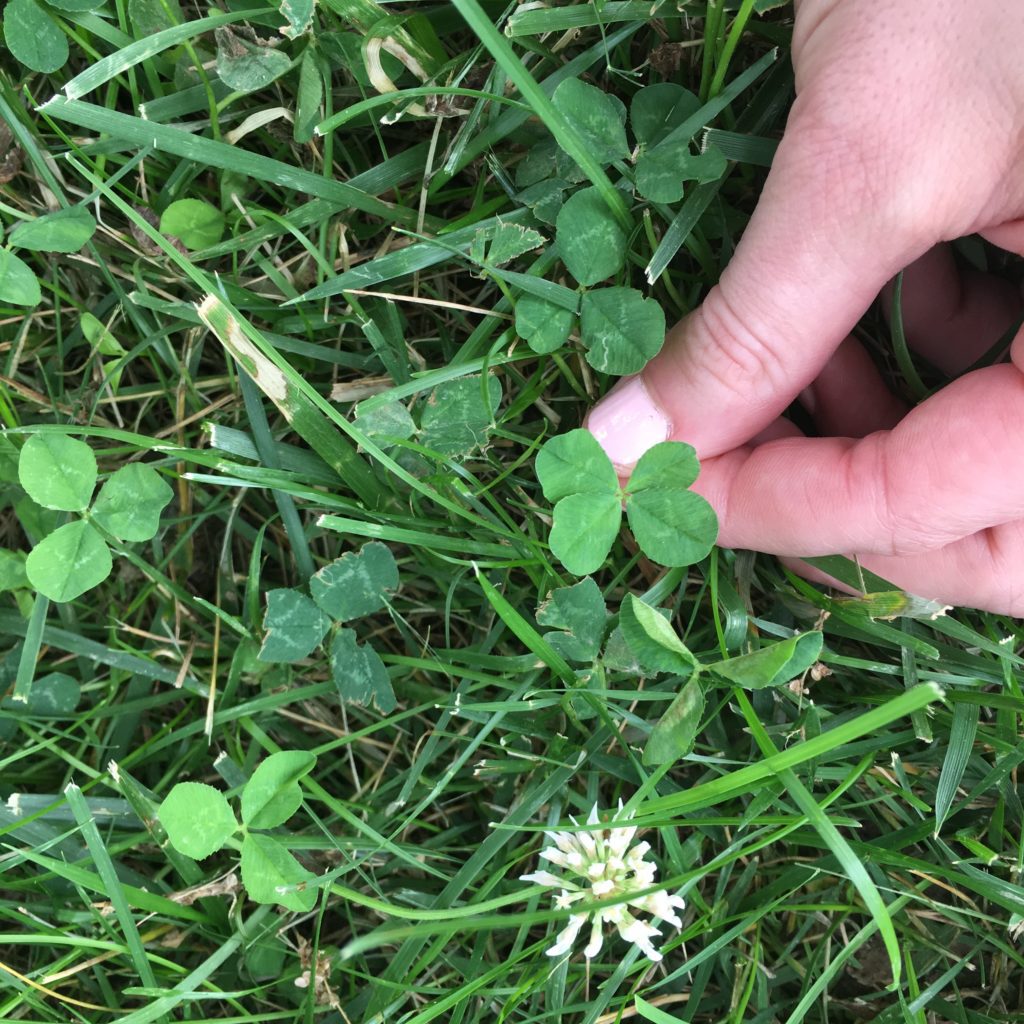
Photo: a four-leafer I found four years ago.